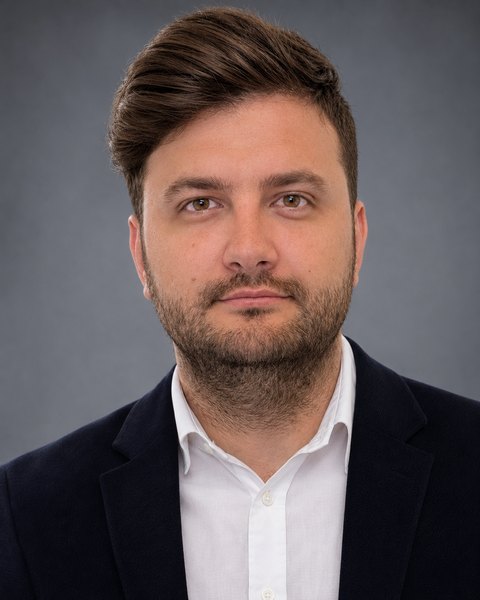
Farhad Yaghoubi Avini
M.Sc. Internet Security
Biography
In 2009 I started my own IT services business and later worked in web server and network administration. After my bachelor's degree in 2019, my interest in IT security led me to the master's programme in Internet Security at Westfälische Hochschule. At the Institute for Internet Security – if(is) I carried out projects on the analysis of Windows APT malware, vulnerability analysis in 5G networks, RAG-based evaluation of threat intelligence reports and the crawling and automated analysis of more than 8,000 German public-administration portals under the Online Access Act (OZG). I completed my master's degree in 2026.
On the blue team I analyse security events with Splunk, Sysmon and my own tools. As a web pentester and bug bounty hunter I have found and reported vulnerabilities at large companies. In research I focus on deep learning for behaviour-based malware detection and on AI-assisted threat intelligence.
Interests
- Threat intelligence
- Reverse engineering
- Malware analysis
- Bug bounty hunting and CTFs
Research
Malware detection
Runtime-Based Detection of PowerShell-Based Fileless Malware Using Deep Learning: A Systematic Architecture Comparison
Neural detectors over script content and Sysmon telemetry, tested on independently collected Windows systems to separate real generalisation from high internal accuracy.
CodeAbstract
Fileless malware and living-off-the-land attacks challenge file-based detection because they abuse legitimate Windows components. PowerShell is a particularly relevant observation point, since both the executed script code and the system activity it triggers can be analysed. This work studies how reliably neural models detect PowerShell-based malware from static code, dynamic behavioural features, and their combination, and how stable this performance remains under changing data- and collection conditions. A custom pipeline executes scripts in a controlled manner and links per-sample static code with Sysmon-based runtime telemetry; 11,989 samples were collected on the primary system. A character-level CNN, a token BiLSTM with attention, tabular-fusion variants, and a Random-Forest baseline are compared. Within the training domain the neural models reach high internal accuracy (up to 99.82%), but on independently collected cross-system data the strongest fusion model drops to 94.87% macro balanced accuracy while the simpler character-level CNN shows the most stable error profile. High internal performance does not imply good generalisation; a mandatory cross-system perspective is required when evaluating such systems.
Threat intelligence
Retrieval-augmented systems for threat intelligence, from a research prototype over 13,409 APT reports evaluated against a plain LLM to Threat Intelligence Assistant, a production-oriented beta with a growing corpus of reports, exploited vulnerabilities and CVEs and cited, verified answers.
Projects
Research software
OZG Portal Analyzer
Measures how digital German public-administration portals are.
over 8,000 portals classified
Flask · Celery + Redis · BeautifulSoup
Code on requestFileless PowerShell Malware Detector
Detects malicious, fileless PowerShell scripts from script code, runtime telemetry or both.
tested across independent Windows systems
PyTorch · scikit-learn · Flask
CodePowerShell Sandbox Telemetry Pipeline
Runs scripts in isolated Windows VMs and links code with Sysmon telemetry into one sample.
automated runs with Sysmon capture per sample
Python · Sysmon · VirtualBox (VBoxManage)
CodeThreat Intelligence RAG
Searches and analyses threat intelligence reports and answers questions with source references.
13,409 APT reports indexed
LangChain · FAISS · Python
Code
Further projects
Xray REALITY Censorship Circumvention
Studies ServerHello-based TLS blocking and tests TLS record splitting as a countermeasure.
8 filtering layers modelled
Python (stdlib) · Xray-core · TLS
Code
Security Daily
Selected security news, briefly put in context.
Selected on Monday, 23 November 2026
Full edition and archive ›

Contact
Research collaboration, a talk, or a question about my work.
Email me atcontact@farhadavini.com
Prefer a structured message? Use the contact form ›